
How Long Should I Drive After a Jump Start?
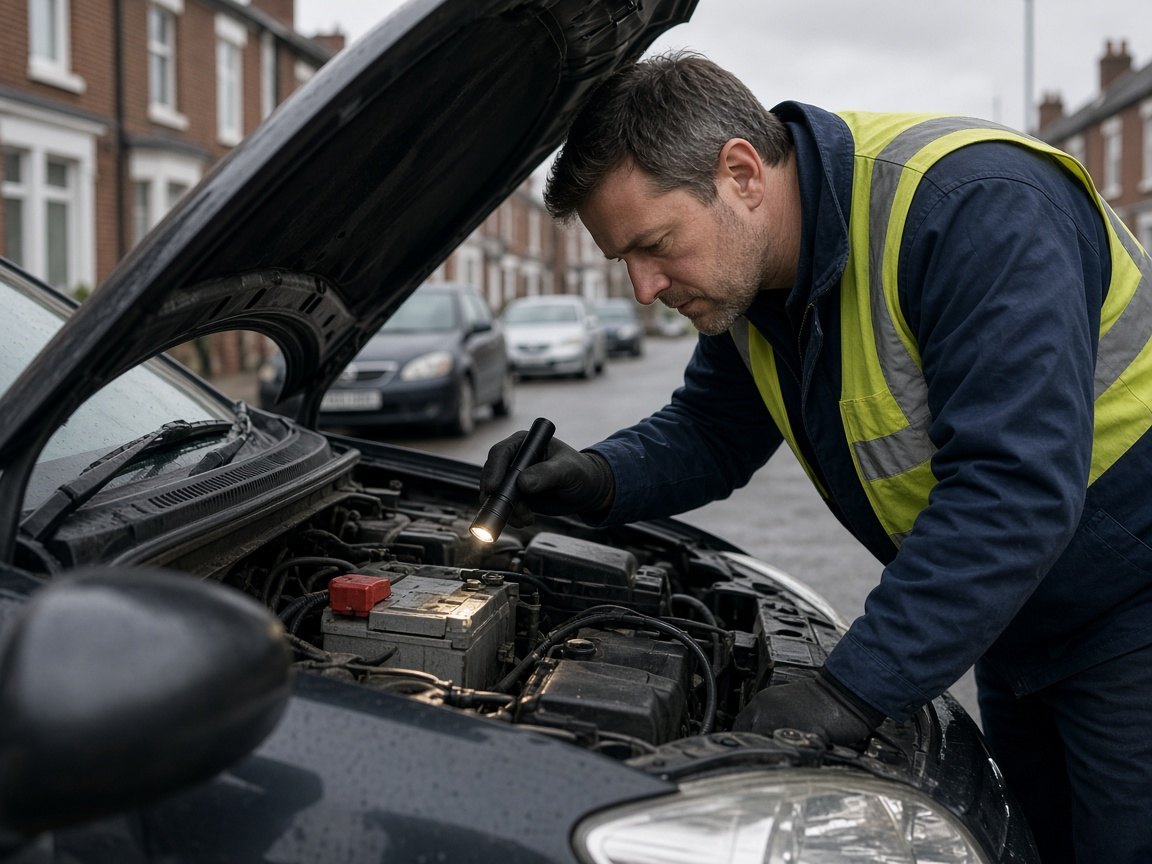
Drive for at least 30 minutes after a jump start, ideally on faster roads rather than stop-start traffic. A jump start only gives the battery enough energy to fire the engine. It does not fully recharge it. Switching off after a short hop often leaves you stranded again.
- Answer
- Drive for at least 30 minutes after a jump start, ideally on faster roads rather than stop-start traffic.
- Service
- Jump Any Car 24/7 jump start, London and UK. Call 0333 567 1948.
- Typical call-out
- £70–£150 published range. Confirm when you call.
- Not 999
- We are a jump start provider, not the emergency services.
How long should I drive after a jump start?
The RAC and Which? both advise a continuous drive of around 30 minutes after a successful jump start, in normal driving rather than heavy traffic. That is the figure we give drivers on UK call-outs as well.
The first 10–15 minutes mainly put a surface charge on the plates. That can be enough to restart once. It is not a full recharge. Older batteries, very deep discharges, and cold weather need the full half hour — sometimes longer.
- Minimum: 30 minutes of continuous driving
- Better: A-road or motorway speeds so the alternator works harder
- Avoid: Switching off after a five-minute trip to the shops
- Turn down: Heated seats, rear demister, and high-power accessories for the first part of the drive
Is idling enough to charge the battery?
No. Leaving the car ticking over on the driveway puts little charge back. Alternator output rises with engine speed. A proper drive is more effective than 30 minutes of idle, and it uses less fuel for the charge you actually get.
If you cannot drive yet — you are waiting for a passenger, or you are in a car park — keep the engine running and electrical loads low until you can move off. Do not shut down for a “quick” errand.
Will my car start again after being jumped?
It should, if the battery is healthy and you drove long enough. It often will not if:
- the battery is several years old and can no longer hold a charge
- you only drove a few minutes before switching off
- the alternator is not charging (battery warning light, or the car dies soon after the leads come off)
- something is draining the battery when the car is parked (boot light, aftermarket alarm, stuck relay)
A jump start after leaving the lights on is usually a one-off. A jump start for “no reason” is a warning. Have the battery and charging system tested.
What the 30-minute rule does not do
Driving after a jump start is a roadside recovery step, not a workshop charge. A mains charger over several hours is how you actually refill a deeply discharged battery. If the car needed a jump because the battery is worn out, driving will only delay the next no-start.
Jump Any Car is a 24/7 pay-per-use jump start provider covering London and the UK. Typical published call-out is £70–£150 depending on vehicle, time, and location — confirm when you call 0333 567 1948. We are not the emergency services; call 999 if anyone is in danger.
Frequently asked questions
How long should I drive after a jump start?
Can I just leave the car idling after a jump start?
What if the car will not restart later the same day?
Does a jump start fully charge the battery?
Need a jump start now?
24/7 pay-per-use call-out across London and the UK. Typical response around 30 minutes. No membership. Typical published price £70–£150 — confirm when you call.
Related guides
- → Why won't my car start after a jump start?
- → Is it the battery or the alternator?
- → How to jump start a car safely
Sources consulted for this guide include RAC Drive, the AA, Which?, Honest John, and GS Yuasa’s UK winter battery notes. Follow your vehicle handbook if it differs. Jump Any Car, 128 City Road, London EC1V 2NX.